You’ve been there. The envelope is sealed. The stamp is stuck. And then it hits you: the check is still on the counter. The birthday card has the wrong year. The letter says “best” when it should say “forever.”
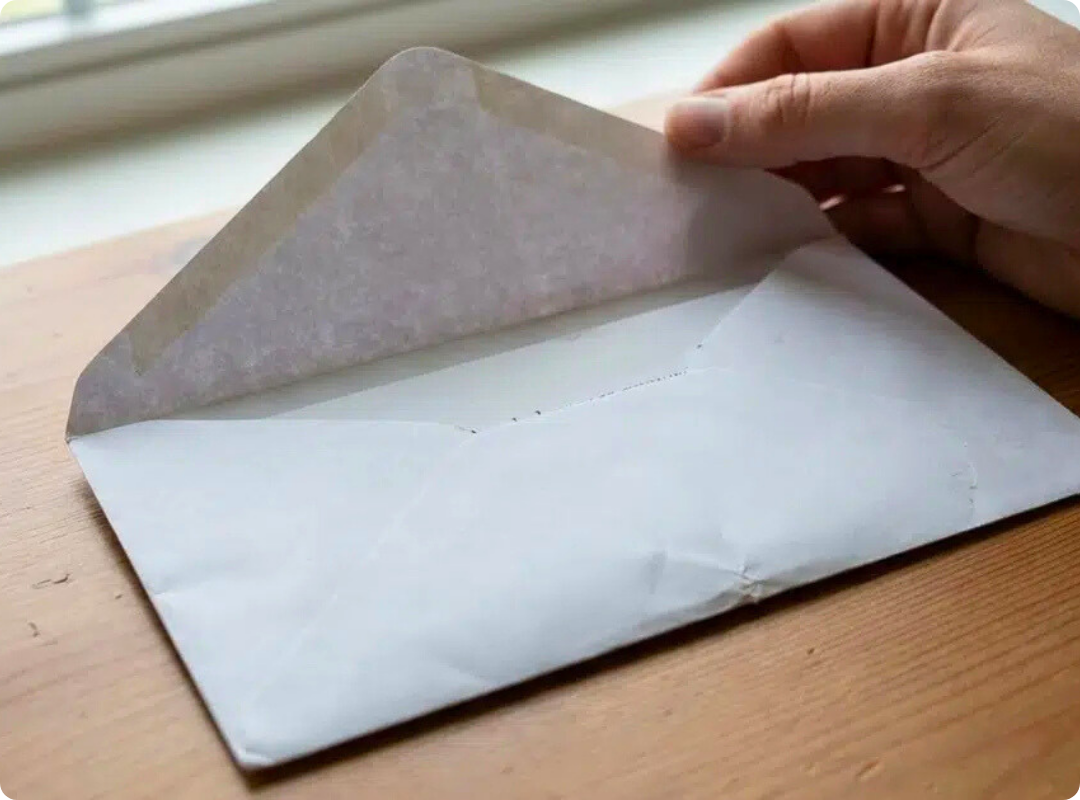
Panic rises. Fingernails hover over the flap. One wrong tug and you’ll shred the paper—or worse, tear the contents inside.
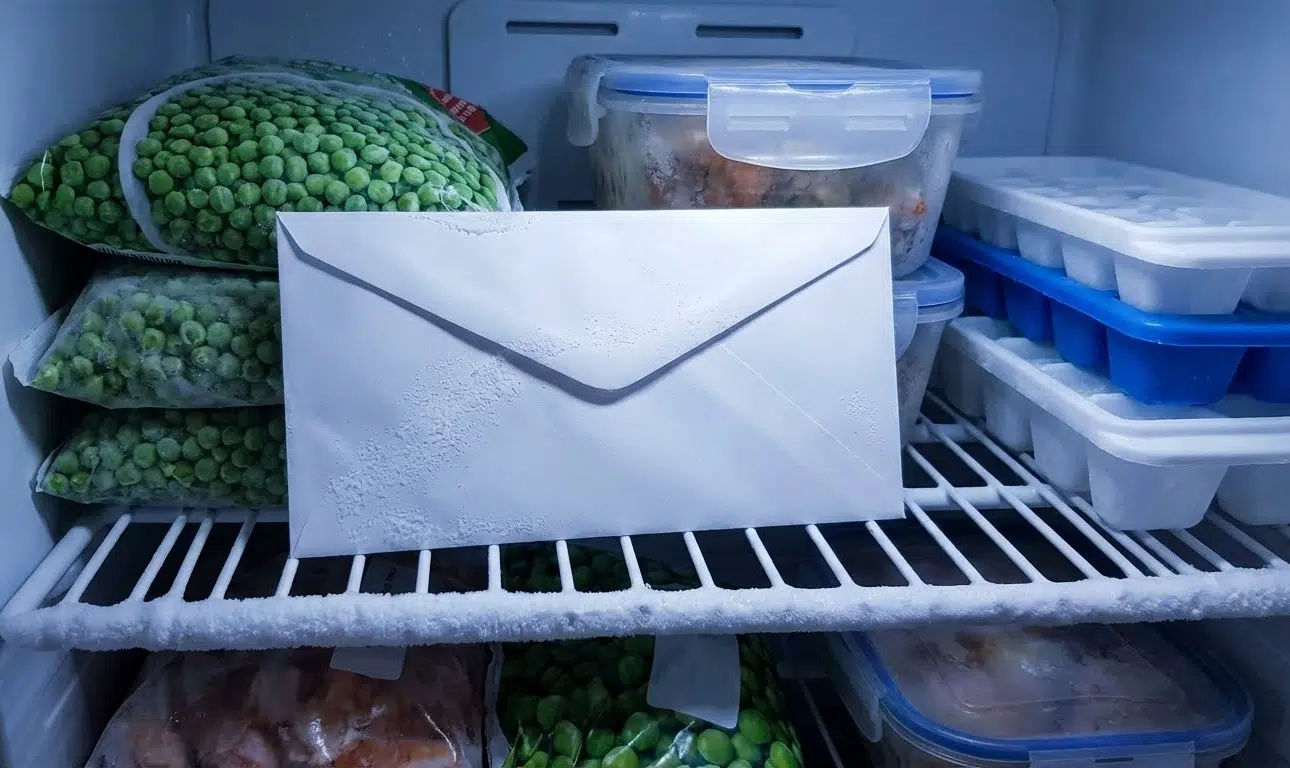
Enter the quiet wisdom of an old trick: the freezer.
Where This Trick Comes From
My grandmother taught me this one winter afternoon, her hands dusted with flour from pie crusts. “Put it in the cold for an hour,” she said, as if sharing a secret the world had forgotten. I laughed—freezing an envelope?—but desperation breeds experimentation. I tried it. And to my surprise, the flap lifted clean away, seal broken without a single tear.
It’s not magic. It’s chemistry meeting patience.
The Science Behind the Chill
Most traditional envelopes use dextrin-based adhesive—a starch glue activated by moisture (that’s the “lick-and-seal” kind). When wet, it flows into paper fibers. As it dries, it hardens into a flexible bond.
Freezing doesn’t melt this glue. Instead, cold makes it brittle. The adhesive loses pliability, its grip on the paper fibers weakens, and—when handled gently—the seal releases like a sigh.
Important note: This only works on water-activated adhesives. Modern “peel-and-stick” envelopes use pressure-sensitive synthetic glues that laugh at freezer temperatures. If your envelope didn’t require saliva to seal, the freezer won’t help.
When It Works Best (And When It Won’t)
✅ Your odds improve if:
→ The envelope uses classic lick-and-seal adhesive (matte finish, not glossy tape-strip)
→ It was sealed recently (within 24–48 hours)
→ You applied just enough moisture—not a soggy drench
→ The paper is substantial (not tissue-thin or foil-like)
→ The envelope uses classic lick-and-seal adhesive (matte finish, not glossy tape-strip)
→ It was sealed recently (within 24–48 hours)
→ You applied just enough moisture—not a soggy drench
→ The paper is substantial (not tissue-thin or foil-like)
❌ It likely won’t work if:
→ It’s a peel-and-stick envelope (common on utility bills or pre-paid return mailers)
→ You pressed the seal with excessive force (glue seeped deep into fibers)
→ Days or weeks have passed (bond has fully cured)
→ It’s a peel-and-stick envelope (common on utility bills or pre-paid return mailers)
→ You pressed the seal with excessive force (glue seeped deep into fibers)
→ Days or weeks have passed (bond has fully cured)
How to Do It Right (Without Ruining Everything)
- Bag it first
Slide the sealed envelope into a resealable plastic bag. Why? Prevents condensation from dampening ink or warping paper when removed from cold. - Freeze gently
Place in freezer for 60–90 minutes. Not overnight—prolonged cold invites moisture buildup. - Thaw with care
Remove envelope (still in bag). Let sit at room temperature for 2–3 minutes until the exterior feels cold but no longer frosty. Never open while icy—condensation will smudge ink. - Peel with patience
Start at one corner. Use your thumbnail or a butter knife to gently lift the flap. Work slowly, applying minimal pressure. If resistance appears, stop. Forcing it guarantees tears. - Accept the limits
Some seals won’t release—and that’s okay. Better a intact envelope than a shredded one.
Gentle Warnings
⚠️ Ink sensitivity: Fountain pen ink or delicate calligraphy may bleed if exposed to moisture. If the contents are precious, skip the freezer and try steaming instead (hold envelope 6 inches above a kettle’s steam for 20 seconds—never let it touch water).
⚠️ No guarantees: This is a sometimes trick—not a always fix. It honors the envelope’s original design while offering a chance at redemption. Nothing more.
Why This Trick Endures
In an age of “undo” buttons and delete keys, there’s something quietly profound about a method that asks us to slow down—to wait an hour, to handle paper with care, to accept that not every mistake can be perfectly reversed.
The freezer trick isn’t about perfection. It’s about grace. The grace to pause. To try gently. To give ourselves a second chance without violence—to paper, or to peace of mind.
So the next time you seal an envelope and your heart sinks—don’t reach for scissors. Reach for the freezer. Give it an hour. And remember: some of life’s best corrections happen not in haste, but in stillness.