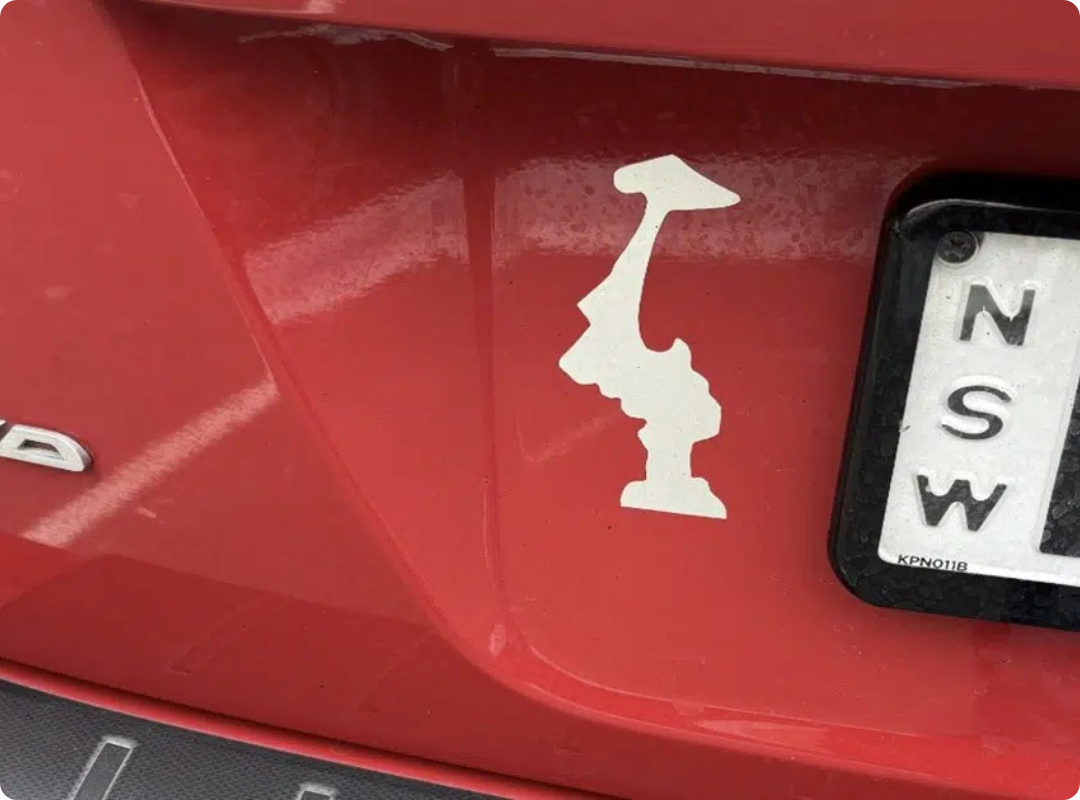
You’ve probably seen it—on a dusty Subaru parked at a trailhead, a weathered Jeep cruising through Utah, or even a camper van in New Zealand: the unmistakable jagged outline of Washington State, proudly displayed… upside down. At first glance, it might look like a mistake. But it’s anything but. This quirky decal has evolved into a quiet yet powerful symbol—part inside joke, part love letter to the Pacific Northwest.
I’ll never forget the first time I spotted one. It was in a Trader Joe’s parking lot, stuck on the rear bumper of a Subaru plastered with adventure gear and bumper stickers. Among them was that familiar silhouette—only flipped. My immediate thought: Did they put it on wrong? Spoiler: they absolutely meant to.
Far from an error, the inverted Washington sticker is a deliberate gesture—subtle, clever, and deeply meaningful to those who choose it.
A Symbol Born from Simplicity
State outline stickers exploded in popularity a few years ago, especially among road-trippers, van-lifers, and proud locals wanting to showcase their roots. Clean, minimalist, and instantly recognizable, these white vinyl decals began appearing everywhere—from laptop lids to water bottles to car windows. Washington, with its dramatic coastline, Olympic Peninsula hook, and Cascade ridgeline, offers one of the most distinctive state silhouettes in the country—making it a natural favorite.
But then, something shifted. Someone flipped it. And others followed.
Why Flip It? Meaning in the Inversion
The reasons for turning Washington upside down are as varied as the people who do it—but that’s what makes it so compelling.
For some, it’s humor. It’s a wink, a nudge: “Yeah, I’m from Washington—but don’t take me too seriously.” It’s playful regional pride with a twist of irony.
For others, it’s deeply personal. Many who’ve moved away—whether across the country or across the globe—flip the sticker as a symbolic gesture of being “upended” or disoriented by distance from home. It’s a visual metaphor for life turned upside down by relocation, yet still anchored to a beloved place. On Reddit and travel forums, expats often say it sparks conversation: “People always ask why it’s upside down,” one user wrote. “It’s my excuse to talk about home.”
And for a third group? It just looks cool. Unconventional. Rebellious. In a sea of identical state decals, flipping yours makes a quiet statement: I see things differently.
To me, it’s like wearing your hometown hoodie inside out—not because you messed up, but because you’re redefining what that pride looks like.
A Global Trail of Northwest Nostalgia
What began as a local quirk has gone global. You’ll spot the upside-down Washington sticker not just in Seattle or Bellingham, but in Banff, Byron Bay, Berlin, and beyond. It’s become a kind of breadcrumb trail left by wandering Washingtonians—a tiny anchor to home, no matter how far they roam.
It’s most often found on vehicles that tell their own story: Subarus with roof racks, Jeeps caked in red dirt, Sprinter vans with solar panels. These are the machines of people shaped by mountains, forests, and coastlines—the very landscapes that define Washington. The sticker isn’t just decoration; it’s identity.
Want One for Yourself?
If you’re now tempted to join the ranks, you’re in good company. Upside-down Washington stickers are widely available on Etsy, Amazon, and even at local Pacific Northwest car shops or outdoor retailers. For longevity—whether braving mountain passes or Seattle’s endless drizzle—opt for high-quality, weather-resistant vinyl.
Even better? Support a local artist. Many Northwest creators sell hand-drawn or custom versions that infuse the design with additional meaning: fir trees, Mount Rainier, salmon, or subtle raindrop motifs.
More Than Just a Sticker
Ultimately, the upside-down Washington decal isn’t a mistake—it’s a message. It can be funny, nostalgic, defiant, or tender. It’s a way to carry home in your rearview mirror, even when you’re thousands of miles away.
So the next time you see one, don’t assume it’s an error. Chances are, it’s a quiet act of belonging—flipped on purpose, full of meaning.
And maybe, just maybe, home isn’t the place you’re standing in right now.
Maybe it’s the place your sticker points back to—even if it’s upside down.