
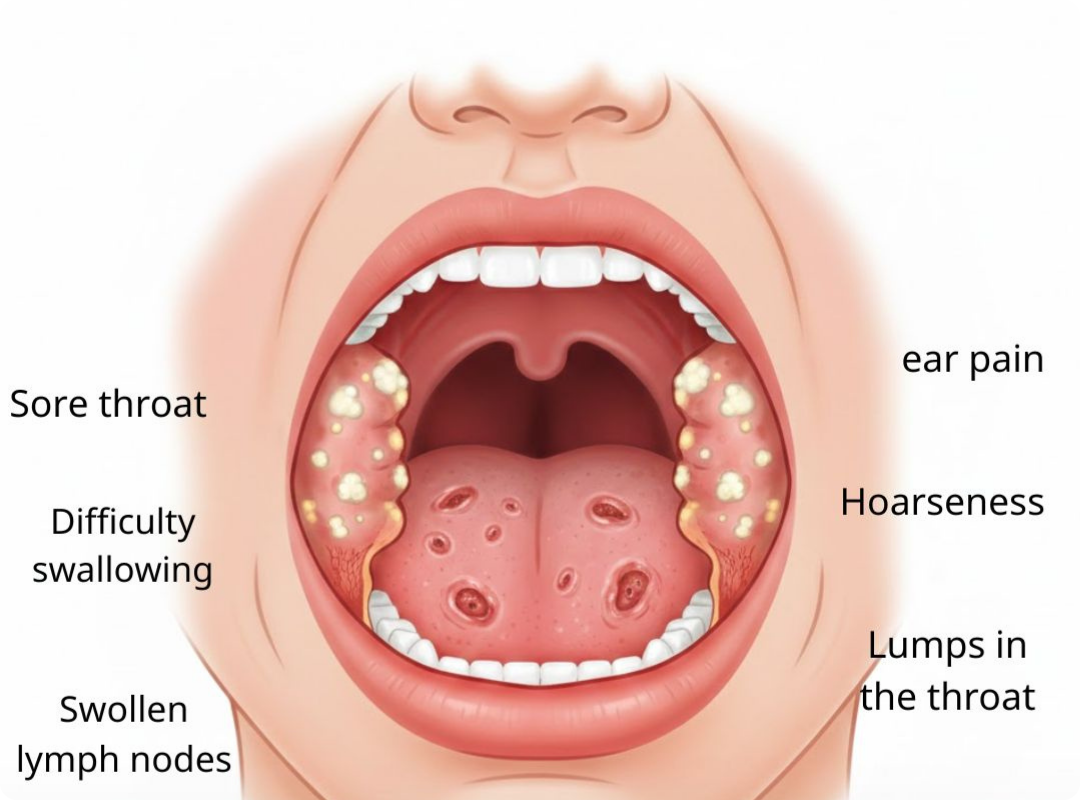
Human papillomavirus (HPV) is best known for its link to cervical cancer, but many people don’t realize it can also affect the throat. In fact, certain high-risk strains of HPV—particularly HPV type 16—are now a leading cause of oropharyngeal cancer (cancer of the back of the throat, including the base of the tongue and tonsils).
The concerning part? HPV-related throat infections often cause no symptoms at all—especially in the early stages. This silent nature is why many cases go undetected until they’ve progressed. However, when symptoms do appear, they can be subtle and easily mistaken for common illnesses like a cold or allergies.
Common Symptoms of HPV in the Throat
While most HPV throat infections clear on their own without treatment, persistent infections can lead to changes in throat tissue. If symptoms do develop, they may include:
- Persistent sore throat that doesn’t improve after 2–3 weeks
- Hoarseness or voice changes lasting more than two weeks
- Difficulty swallowing (dysphagia) or a feeling that something is “stuck” in the throat
- Ear pain (often one-sided), which can occur due to shared nerve pathways
- A lump in the neck—this is often the first noticeable sign and may be a swollen lymph node
- Unexplained weight loss or fatigue in more advanced cases
It’s important to note: these symptoms are not unique to HPV. They can also be caused by acid reflux, vocal strain, infections, or other conditions. However, if any symptom lasts longer than two weeks—especially without a clear cause—it’s worth seeing a doctor.
Who Is at Risk?
HPV is primarily spread through intimate skin-to-skin contact, including oral sex. Most sexually active people will be exposed to HPV at some point in their lives, but the immune system usually clears the virus without issue.
However, in some individuals—particularly those with weakened immune systems or who smoke—the virus can persist and lead to cellular changes over time (often 10–30 years after initial exposure).
Men are about four times more likely than women to develop HPV-related throat cancer, though anyone can be affected.
Is There a Test for HPV in the Throat?
Currently, there is no routine screening test for HPV in the throat, unlike the Pap smear for cervical HPV. Diagnosis typically happens only after symptoms appear and a doctor performs an examination—often including a scope or biopsy.
Because of this, awareness and early evaluation of persistent symptoms are crucial.
Prevention: The HPV Vaccine
The HPV vaccine (Gardasil 9) is highly effective at preventing infection from the strains most commonly linked to throat and other cancers—including HPV 16 and 18. It’s recommended for:
- All children at ages 11–12
- Teens and young adults up to age 26
- Adults aged 27–45 after discussion with a healthcare provider
Even if you’ve been sexually active, the vaccine can still offer protection against strains you haven’t yet encountered.
When to See a Doctor
Seek medical evaluation if you experience:
- A sore throat, hoarseness, or swallowing difficulty that lasts more than 2–3 weeks
- A new lump in the neck that doesn’t go away
- Unexplained ear pain or voice changes
Early detection significantly improves outcomes—HPV-related throat cancers often respond very well to treatment when caught early.
HPV in the throat is more common than many realize—but thanks to advances in prevention and treatment, it’s also increasingly manageable. While most infections cause no harm, staying informed about potential symptoms and taking preventive steps—like vaccination—can protect your long-term health.
If you’re concerned, don’t wait. A quick visit to your doctor or an ENT specialist can bring clarity and peace of mind. Because when it comes to your health, even the quietest symptoms deserve to be heard.