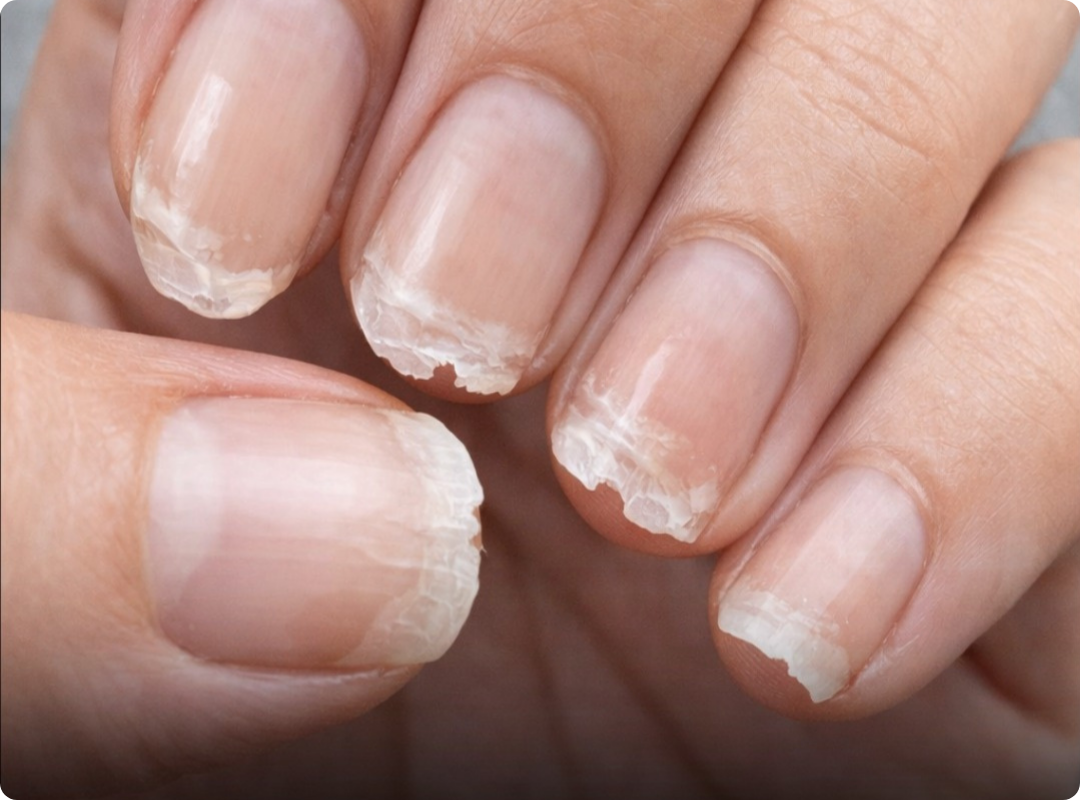
That moment when your nail catches on a sweater and splits—not with a dramatic crack, but a soft, almost apologetic tear. You sigh, reach for the nail file, and move on. Yet this small rupture may be more than bad luck. It’s often your body’s earliest, most visible plea for attention—long before fatigue, hair loss, or brain fog appear.
Nails, like hair and skin, are metabolic mirrors. Composed of layered keratin, they grow slowly (3 mm/month), making them sensitive barometers of nutritional status, hydration, and systemic balance. When they thin, peel, or splinter easily, it’s rarely just about polish or genetics. It’s physiology speaking in fragments.
🔍 What Weak Nails Reveal—And How to Respond
1. The Nutrient Deficit You Can’t Ignore
Nails need sustained nourishment—not quick fixes. Three key deficiencies commonly manifest here first:
- Biotin (B7) Shortfall
→ Signs: Paper-thin nails, longitudinal ridges, splitting at the free edge.
→ Science: Biotin supports keratin infrastructure. Studies show supplementation can improve thickness in deficient individuals—but food-first is safer and more sustainable.
✅ Prioritize: Pasture-raised eggs (yolk intact), almonds, sweet potatoes, mushrooms, and leafy greens. Note: Raw egg whites contain avidin, which blocks biotin—always cook eggs. - Iron Deficiency (Even Without Anemia)
→ Signs: Spoon-shaped nails (koilonychia), extreme brittleness, pale nail beds.
→ Science: Iron fuels oxygen delivery to the nail matrix. Subclinical deficiency impairs cell turnover long before hemoglobin drops.
✅ Prioritize: Pair plant-based iron (lentils, spinach) with vitamin C (bell peppers, citrus) for absorption. Limit tea/coffee with meals—they inhibit uptake. - Inadequate Protein
→ Signs: Slow growth, white spots (not zinc-related, as once thought—often minor trauma), weak nail plate.
✅ Prioritize: 20–30g protein per meal: Greek yogurt, salmon, lentils, chicken, or tofu. Collagen peptides (10g/day) may support nail strength—though whole proteins remain foundational.
2. Dehydration: The Invisible Stressor
Water isn’t just for skin glow—it maintains nail pliability. Dehydrated nails lose elasticity, becoming prone to micro-tears and peeling.
→ Try this: Track your water intake for 3 days. If you’re under 1.5–2L/day (adjust for climate/activity), add one glass hourly. Notice changes in 2–3 weeks.
3. Environmental Assaults (You Can Control)
Your nails face daily chemical warfare:
- Acetone-based removers dissolve natural lipids.
- Dish soap & cleaners strip protective oils.
- Gel manicures dehydrate via UV curing + aggressive removal.
✅ Shield your nails:
→ Wear nitrile (not latex) gloves for wet work.
→ Swap acetone for soy-based or ethyl acetate removers.
→ Take a 2-week “nail holiday” between gel applications.
4. Habits That Undermine Strength
- Over-washing + skipping moisturizer: Compromises the hyponychium (seal at nail tip)—a key barrier against pathogens.
- Nail biting/picking: Creates microtrauma, inviting infection (paronychia).
- Using nails as tools: Leverage weakens the plate’s integrity.
✅ Repair daily: Massage cuticles with jojoba or argan oil nightly—enhances circulation and seals moisture.
⚠️ When to Seek Help
Consult a healthcare provider if you notice:
- Beau’s lines (horizontal grooves)—sudden illness or chemo
- Yellowing/thickening—fungal infection or psoriasis
- Dark streaks—melanoma (rare but critical)
- Pitting or crumbling—autoimmune conditions (psoriasis, alopecia areata)
Blood tests (ferritin, B12, zinc, thyroid) can pinpoint hidden deficiencies.
Your nails aren’t ornaments. They’re archives—recording months of nutritional choices, stress levels, and environmental exposures in their very structure.
Tending to them isn’t vanity. It’s vigilance.
It’s honoring the quiet resilience of your body—
one strong, unbroken nail at a time.
Listen closely. Your health is speaking—even in whispers.