It starts with a flicker of unease. A glance at your pillowcase. A pause. A closer look.
What… is that?
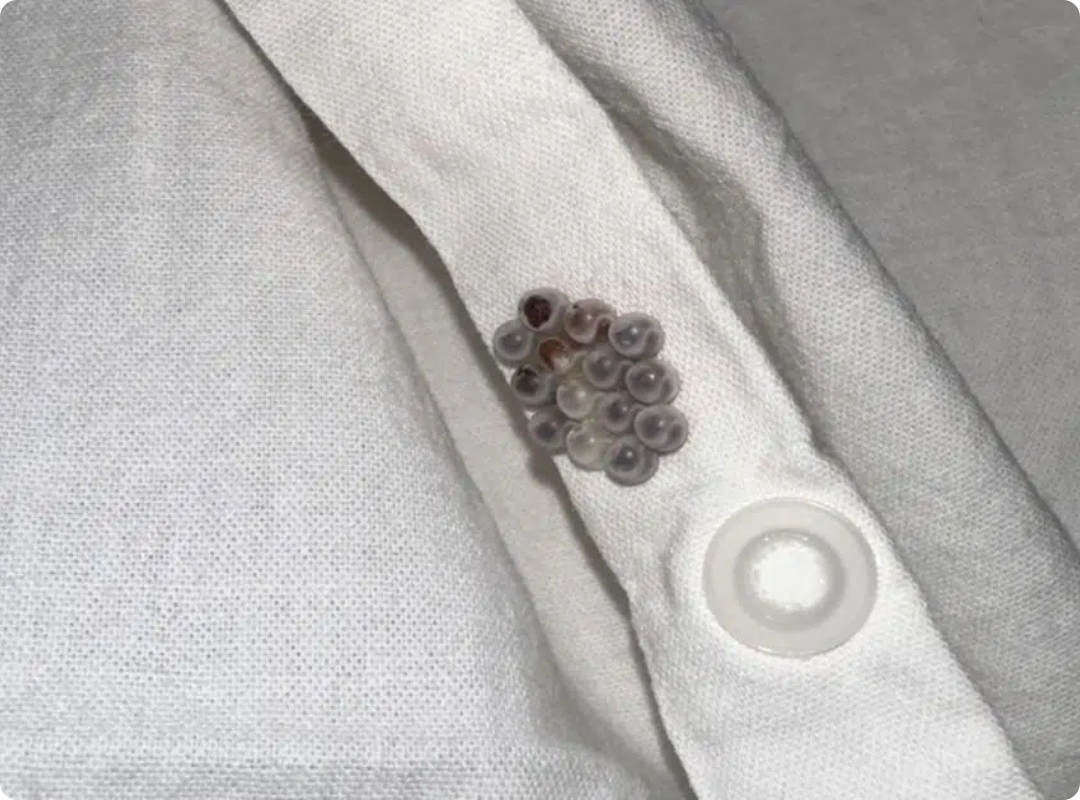
A cluster of pale, barrel-shaped specks—neatly arranged like someone’s been practicing micro-calligraphy with Tic Tacs. Your brain stutters. You lean in. You Google: “tiny eggs on fabric?”
And then—yes—you find it. The answer, lurking in a late-night Reddit thread, as bizarre as it is true: stink bug eggs.
You’re not imagining things. You’re not “gross” for noticing. And you’re definitely not alone.
🔍 What They Look Like—And Why They Seem So… Intentional
Stink bug eggs aren’t haphazard. They’re architectural.
- Size: ~1 mm each—smaller than a poppy seed.
- Color: Pale green when fresh, fading to gray or off-white.
- Arrangement: 20–30 ovals, laid in tight, symmetrical double rows—like tiny soldiers standing at attention.
- Texture: Smooth, slightly glossy—almost waxy to the touch.
They cling with surprising tenacity, often tucked into fabric folds, seam lines, or the soft creases of freshly folded laundry. And yes—they do resemble miniature Tic Tacs. Uncanny. Unsettling. Utterly unforgettable once seen.
🤔 But… Why My Sheets?
Stink bugs aren’t malevolent. They’re opportunistic—and terrible at reading social cues.
They seek:
✅ Warmth (your sun-drenched laundry basket)
✅ Darkness (under folded towels, inside pillowcases)
✅ Stillness (a bed untouched for hours)
✅ Access (a half-open window, a torn screen, a crack under the door)
If you dry clothes outside, bring in potted plants, or live near fields or woods—congratulations. You’ve got curb appeal… to a stink bug.
🚫 Are They Dangerous? Let’s Be Clear:
- No biting.
- No stinging.
- No toxins released (unless you crush them—more on that in a sec).
The real issue?
➡️ Eggs hatch in 4–5 days into nymphs—tiny, wingless, and voracious.
➡️ One clutch → dozens of nymphs → hundreds of adults by season’s end.
➡️ And adults? When threatened, they emit a pungent, cilantro-gone-wrong odor that lingers for days on fabric, skin, and yes—your favorite sheets.
Do not squish them on bedding.
(Trust us on this.)
🛠️ What to Do—Calmly, Efficiently, Effectively
Step 1: Remove the Eggs (Without Drama)
→ Tape method: Press clear packing tape gently over the cluster. Lift. Most eggs will adhere cleanly.
→ Scrape method (if tape fails): Use a credit card edge to lift the cluster onto a tissue—do not rub.
Step 2: Contain & Dispose
→ Fold the tape/tissue into a sealed plastic bag.
→ Toss outside—not in your bedroom trash.
Step 3: Launder—Smartly
→ Wash affected linens in hot water (130°F / 54°C+) with detergent.
→ Dry on high heat—heat kills any stragglers.
Step 4: Sweep the Area
→ Vacuum baseboards, window sills, under the bed.
→ Empty the canister outside immediately.
🛡️ How to Keep Them Out (For Good)
|
Prevention
|
Why It Works
|
|---|---|
|
Seal cracks (windows, doors, siding) with caulk or weatherstripping
|
Blocks entry points as thin as a credit card
|
|
Inspect laundry before bringing in from the line—or give it a vigorous shake outside
|
Dislodges hitchhikers before they nest
|
|
Repair torn screens—even tiny holes matter
|
Stink bugs don’t need much: 1/16 inch is enough
|
|
Use peppermint oil spray (10 drops in 1 cup water) on windowsills/door frames
|
Repels many insects (though evidence is anecdotal—but hey, it smells nice)
|
|
Turn off outdoor lights at night or use yellow “bug” bulbs
|
Reduces attraction during evening swarming
|
🐞 Note: If you see 10+ adults indoors between October–April, consider a preventative pesticide barrier (applied by a pro) in early fall. Once they’re in, they’re hibernating—not breeding—so removal is still your best bet.
📜 The Stink Bug Life Cycle: A Brief (But Critical) Timeline
- Eggs laid: Spring–early summer (clusters on leaves, fabric, walls)
- Hatch: 4–5 days later → nymphs (brightly colored, wingless)
- Molt: 5 times over 4–5 weeks, growing darker, developing wings
- Adults: By late summer—ready to overwinter inside your walls
- Lifespan: 6–8 months. One female lays 300–400 eggs per season.
Translation: A single egg cluster today could mean hundreds of invaders by fall.
🌿 A Final Thought
Finding stink bug eggs on your sheets isn’t a reflection of cleanliness. It’s not a personal failing. It’s simply biology meeting architecture—and biology’s very good at improvising.
You don’t need bleach baths or hazmat suits. You need knowledge, tape, hot water, and the quiet confidence that comes from knowing:
This is solvable. This is temporary. This is not the end of peaceful sleep.
So remove the eggs. Wash the sheets. Seal the cracks. And tonight, rest easy—knowing you’ve reclaimed your sanctuary, one tiny, tidy cluster at a time.