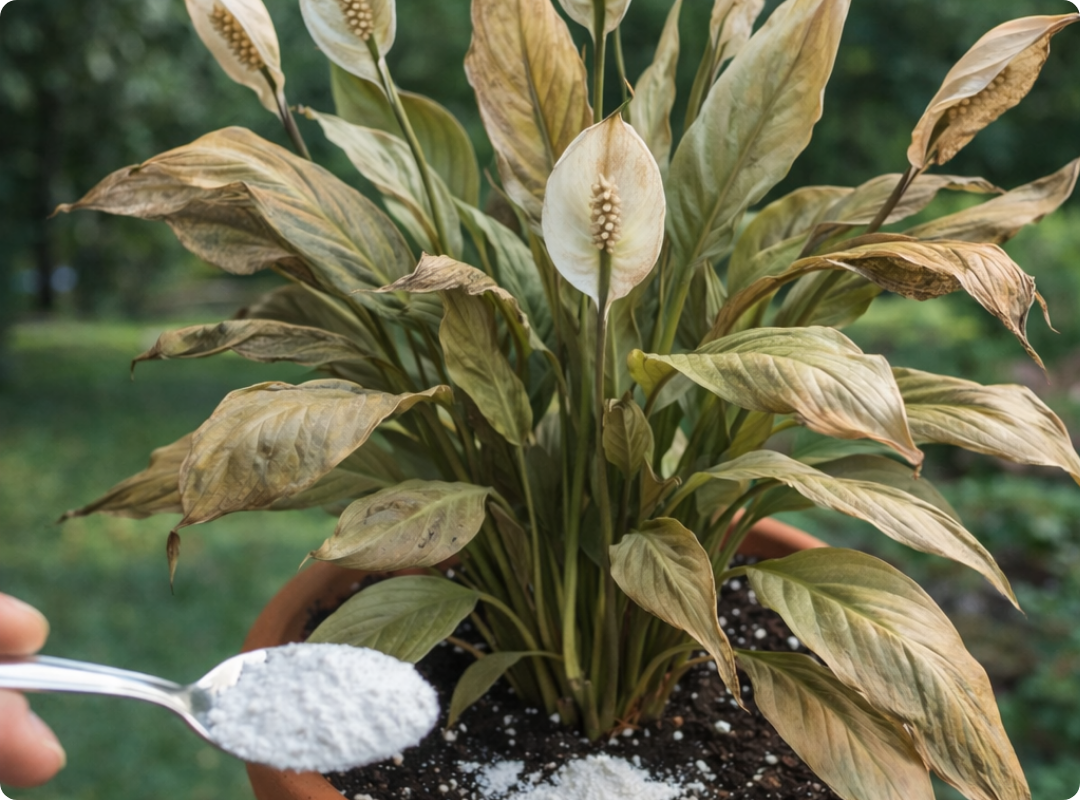
One week your peace lily is lush, glossy, and thriving. The next, it’s yellowing, drooping, and looking like it’s on its last leaf. It’s enough to make any plant parent panic—but before you toss it in the compost, take heart: your peace lily may not be dying at all. More often than not, it’s simply stressed—and there’s a gentle, widely available remedy that can help it bounce back.
That remedy? A simple fungicide powder—not as a cure-all, but as a targeted tool to address one of the most common hidden causes of decline: root distress.
In this guide, we’ll explore why peace lilies struggle indoors, how this unassuming powder can support recovery, when it works (and when it doesn’t), and—most importantly—how to use it safely and effectively.
Why Peace Lilies “Die” Indoors (It’s Rarely Age)
Peace lilies are remarkably resilient, and they rarely fail due to old age. Instead, their decline usually stems from cultural stress, often tied to root health and soil conditions. Common culprits include:
- Overwatering – leading to waterlogged soil
- Poor drainage – causing roots to suffocate
- Mild root rot – triggered by constant moisture
- Salt buildup – from tap water or synthetic fertilizers
- Oversized pots – where soil stays wet for too long
- Low light + overwatering combo – a classic killer duo
These issues manifest in telltale signs:
✅ Yellow leaves
✅ Brown, crispy leaf tips
✅ Persistent drooping—even after watering
✅ Lack of blooms
✅ A faint musty or moldy odor from the soil
What looks like a dying plant is often a distressed root system crying out for help.
The Role of Fungicide Powder: Gentle Support, Not a Miracle Cure
The “simple powder” many gardeners turn to is a gentle, broad-spectrum fungicide (often containing ingredients like trichoderma or sulfur). When used correctly, it can:
- Help suppress harmful fungi contributing to root rot
- Create a healthier soil environment for recovery
- Give stressed roots a chance to regenerate
But it’s not magic. Fungicide won’t fix chronic overwatering, poor light, or compacted soil. It works best as part of a full recovery plan—not a standalone solution.
How to Use It Safely & Effectively
- Confirm the issue: Only use fungicide if you suspect fungal activity (e.g., soggy soil, foul smell, blackened roots).
- Repot first: Gently remove the plant, trim mushy roots, and repot in fresh, well-draining soil (a mix of potting soil, perlite, and orchid bark works well).
- Apply sparingly: Follow package directions. Most powders are mixed with water and drenched into the soil—or lightly dusted on roots during repotting.
- Adjust care: Place in bright, indirect light. Water only when the top 1–2 inches of soil are dry. Avoid fertilizing until new growth appears.
⚠️ Never apply fungicide to healthy plants—it can disrupt beneficial soil microbes.
When It Works—and When It Doesn’t
✅ Works well when:
- Root rot is mild and caught early
- Paired with proper repotting and care changes
- Used preventatively after overwatering incidents
❌ Fails when:
- Roots are completely rotted (black, slimy, no firm white tissue)
- The plant is suffering from severe dehydration or sunburn
- Underlying issues (like low light or poor drainage) aren’t addressed
The Real Secret to Peace Lily Recovery
While fungicide powder can be a helpful ally, the true revival comes from listening to your plant. Peace lilies thrive on consistency:
- Let the soil dry slightly between waterings
- Provide bright, indirect light (no direct sun!)
- Use filtered or rainwater to avoid salt buildup
- Choose a pot only 1–2 inches larger than the root ball
With patience and the right care, even a seemingly doomed peace lily can send up new leaves within weeks—proof that sometimes, what looks like the end is just a call for change.
So before you give up, try this gentle reset. Your peace lily might just thank you with a bloom