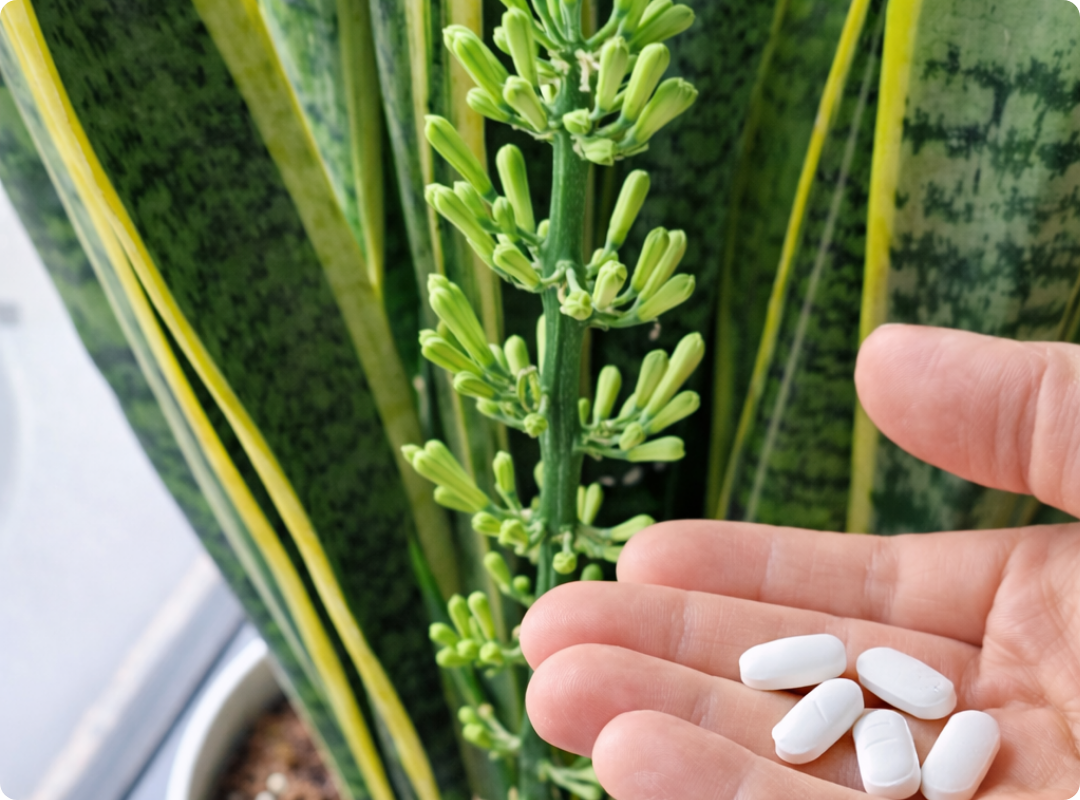
When a snake plant suddenly sends up a tall, slender flower stalk crowned with delicate white or pale green blooms, many owners panic. Is it stressed? Dying? Did I overwater it?
In truth, flowering is one of the clearest signs your snake plant is thriving—not struggling. Far from being a cause for concern, this rare indoor bloom signals that your plant has achieved a quiet, hard-won balance most houseplants never reach. Let’s uncover what’s really happening, why it occurs indoors, and what it reveals about your plant’s long-term health.
Why Snake Plant Blooms Surprise Everyone
Snake plants (Sansevieria) are legendary for their toughness:
- They grow slowly and steadily
- Tolerate low light and occasional neglect
- Purify air with quiet efficiency
Because of this “unkillable” reputation, few expect them to do anything as dramatic as flower. But when conditions align just right, they respond with an elegant, fragrant stalk—a silent celebration of stability.
The Real Trigger Behind Flowering
Contrary to myth, snake plants don’t bloom because of overcare or excess fertilizer. Instead, flowering is triggered by a subtle combination of maturity and mild, non-harmful stress:
- Roots are slightly confined (but not rotting)
- Watering is consistent and infrequent
- Light is bright but indirect
- The plant has lived undisturbed for years
In essence, the plant feels secure enough to shift energy from survival to reproduction. This is especially common in calm, well-lit homes—think sun-dappled living rooms, quiet offices, or north-facing windowsills where the plant has settled in for the long haul.
Why “Mild Stress” Encourages Blooms
Native to arid regions of West Africa, snake plants evolved to reproduce when resources are stable but limited. A snug pot, predictable dry periods, and steady temperatures mimic their natural cycle—signaling that it’s safe to invest energy in flowers rather than just leaves.
That’s why blooming often happens when:
- The plant hasn’t been repotted in 3–5 years
- You water only when the soil is completely dry
- Indoor temperatures remain consistent year-round
This isn’t distress—it’s maturity in full bloom.
What Flowering Reveals About Plant Health
A flowering snake plant is typically:
- Fully established in its environment
- Root-strong and metabolically balanced
- Deeply adapted to your home’s rhythm
The flower stalk draws on stored nutrients in the leaves, which may cause growth to slow temporarily after blooming. This is normal—and no reason to change your care routine.
Should You Cut the Flower Stalk?
You have two perfectly safe options:
- Leave it: Enjoy the subtle, sweet fragrance (especially noticeable in the evening) and graceful silhouette.
- Trim it: Once flowers fade, snip the stalk at the base to redirect energy back to leaf growth.
Either choice supports your plant’s long-term vitality.
How to Encourage—or Discourage—Flowering
Want blooms?
- Keep the plant slightly root-bound
- Provide bright, indirect light
- Avoid frequent repotting
Prefer lush foliage?
- Repot into a slightly larger container every 3–4 years
- Increase light exposure gradually
Both approaches keep your snake plant healthy and visually striking.
Debunking Common Myths
❌ “Flowering means the plant is dying.”
✅ Truth: It usually means the opposite—your plant is thriving.
❌ “Flowers drain the plant permanently.”
✅ Truth: Snake plants recover naturally; blooming is a seasonal event.
❌ “Only outdoor snake plants flower.”
✅ Truth: Indoor blooms are more common than you think—especially in stable, mature specimens.
Frequently Asked Questions
Do the flowers smell?
Yes! Many emit a light, sweet fragrance, strongest in the evening.
How long do they last?
Typically 2–4 weeks, depending on light and humidity.
Will it flower again?
Yes—though irregularly. Consistency is key.
Should I fertilize during flowering?
No. Overfeeding can disrupt the delicate balance that triggered blooming.
Does flowering affect air-purifying benefits?
Not at all. Your snake plant remains a top-tier air purifier.
Is flowering common in modern homes?
Increasingly so—as people keep plants longer and create calmer, more stable environments.
A flower stalk on a snake plant isn’t an accident. It’s a quiet triumph—a testament to patience, restraint, and attuned care. In a world of fast results and constant change, this slow, silent bloom reminds us that some of the most beautiful rewards come not from doing more, but from doing less… and letting nature take its course.
So if your snake plant flowers, don’t worry—celebrate. You’ve created a home where even the toughest plant feels safe enough to bloom.