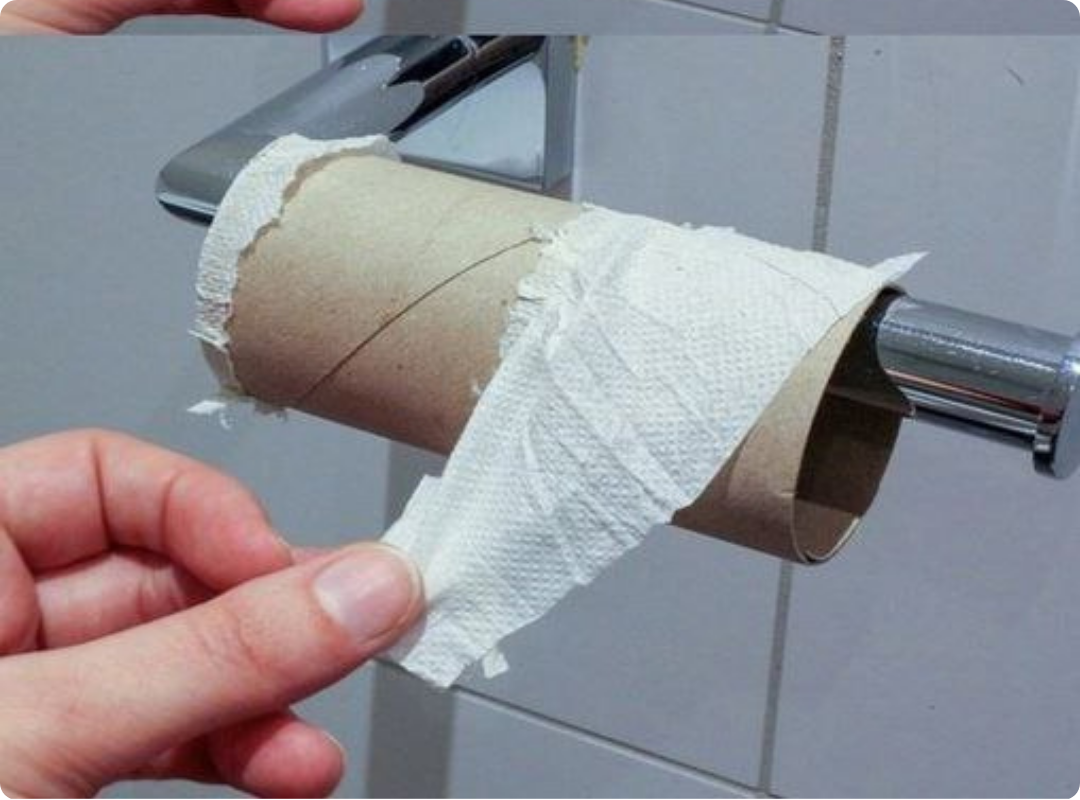
For over 150 years, the humble toilet paper roll has been a silent fixture in bathrooms worldwide—soft, familiar, and seemingly indispensable. Yet beneath its unassuming spiral lies a growing tension: between convenience and consequence, habit and health, tradition and transformation.
From French supermarkets to Japanese smart toilets, a quiet revolution is unfolding—one that asks: What if our most routine act of hygiene could be cleaner, greener, and kinder—to our bodies and the planet?
This isn’t about panic. It’s about possibility.
🌍 The Hidden Cost of a Simple Roll
Toilet paper, as we know it, was commercialized in 1857 by Joseph Gayetty—a “medicated paper” meant to soothe hemorrhoids. What began as a luxury is now a global habit: the average American uses 141 rolls per year—enough to wrap the Eiffel Tower three times over.
But this comfort comes at a steep price:
- Deforestation: 27,000 trees are flushed daily to keep up with global demand—much of it from ancient boreal forests in Canada.
- Pollution: Bleaching (for that “pure white” look) releases dioxins; production consumes 37 gallons of water per roll.
- Carbon footprint: Transporting bulky rolls worldwide adds up—1.5 million tons of CO₂ annually in the U.S. alone.
In France—where per-capita usage rivals Japan’s—eco-conscious consumers are beginning to question: Is there a better way?
⚠️ More Than Trees: A Health Wake-Up Call
Recent studies, including groundbreaking work from the University of Florida, reveal an unsettling truth: some toilet papers contain trace levels of PFAS (“forever chemicals”) and formaldehyde-releasing preservatives—chemicals linked to hormone disruption, reduced fertility, and elevated cancer risk.
Why? Recycled paper—often sourced from thermal receipts (coated in BPA) or office waste—can carry contaminants that survive processing. While levels are low, chronic exposure through intimate contact raises legitimate concern—especially for vulnerable populations.
The takeaway? Cleanliness shouldn’t come at the cost of toxicity.
💧 The Rise of the Water Wash: Bidets, Sprayers, and Beyond
Long dismissed as old-world or niche, water cleansing is surging—not as a compromise, but as superior hygiene.
- Bidets: From sleek Italian fixtures to attachable sprayers (like Tushy or Brondell), modern bidets use just ¼ cup of water per use—less than flushing once.
- Japanese Smart Toilets: With heated seats, air dryers, and precision nozzles, they’ve made water cleansing comfortable, even luxurious.
- The Science: Dermatologists confirm: water is gentler on sensitive skin than abrasive paper—and far more effective at removing residue, reducing UTIs, hemorrhoids, and irritation.
“In medicine, we clean wounds with water—not sandpaper.”
— Dr. Evan Goldstein, colorectal surgeon
♻️ The Reusable Revolution: Cloth, Not Compost
Yes—reusable toilet paper is real. Made from soft, absorbent cotton or bamboo fleece, these small squares (think: washable handkerchiefs for your backside) are laundered and reused.
Pros:
✅ Zero waste
✅ No chemical exposure
✅ ~90% cost savings over 5 years
✅ Gentle on skin (ideal for hemorrhoids, IBS, or postpartum care)
Cons? Mostly perception: the “ick” factor fades fast once users experience the clean, dry comfort of a soft cloth—and the pride of closing the loop.
🧭 The Real Challenge: Shifting Culture, Not Just Products
Habits die hard. The bidet’s slow adoption in the U.S. isn’t about cost (basic models start at $30) or space—it’s about mental bandwidth. We’ve been conditioned to equate “clean” with “dry,” when in truth, water is nature’s original cleanser.
Success requires:
🔹 Education: Demystifying the process (no, you don’t get wet—you get clean).
🔹 Accessibility: Subsidies for low-income households, bidet mandates in new construction (like in Italy and Japan).
🔹 Normalization: Celebrities, doctors, and influencers modeling the shift—not as radical, but as rational.
💰 The Economics of Letting Go
Yes, there’s an upfront cost: a $50 sprayer, a $200 smart toilet, or $20 for a set of reusable cloths. But consider the math:
- 1 person × 100 rolls/year × $1 = $100/year
- Sprayer ($50) + water ($2/year) = $52 over 5 years
For cities, the savings multiply: less sewage clogging, lower water treatment loads, reduced landfill strain. Sustainability isn’t sacrifice—it’s smart infrastructure.
🏛️ Policy as Catalyst
Governments are stepping in:
- France: Tax breaks for eco-hygiene products; bans on PFAS in paper goods.
- Japan: Building codes require bidet-ready plumbing.
- Sweden: Public campaigns framing water cleansing as modern, hygienic, and progressive.
The message is clear: this isn’t fringe. It’s the future—sanctioned, supported, and scalable.
🔮 A Cleaner Tomorrow—One Flush at a Time
This isn’t about eliminating toilet paper overnight. It’s about expanding the menu—giving people real choice, grounded in science and sustainability.
Imagine a world where:
🌱 Forests stand tall, not in rolls on shelves
💧 Water cleans gently, not abrasively
🧼 Skin stays healthy, not irritated
💰 Households save hundreds, not spend endlessly
The roll had a good run. But the next chapter of hygiene isn’t about what we use up.
It’s about what we preserve—resources, health, and the quiet dignity of caring for ourselves, and our world, with greater wisdom.
The future of clean is clear.
It’s just waiting for us to turn on the tap.