You’ve tried blackout curtains, white noise machines, and magnesium supplements. Yet you still wake with a stiff neck, a foggy mind, or that familiar ache behind your eyes. What if the missing piece isn’t in your routine—but in the quiet geometry of your body as you sleep?
Sleep is not passive rest. It’s a nightly symphony of regeneration: your brain flushes toxins, your spine decompresses, your heart resets. And just as a musician needs proper posture to play beautifully, your body needs alignment to heal deeply. The position you assume for 7–8 hours isn’t incidental—it’s foundational.
Here’s what science—and real lived experience—reveals about the profound, often overlooked impact of how you sleep.
🚨 When Your Body Whispers (Before It Shouts)
That morning headache. The midnight cough that wakes you. Waking exhausted after eight hours. These aren’t just “bad sleep”—they’re signals. Often misattributed to stress or an old mattress, they may stem from a single, correctable factor: posture.
- Loud snoring or gasping? → Airway collapse from supine (back) sleeping.
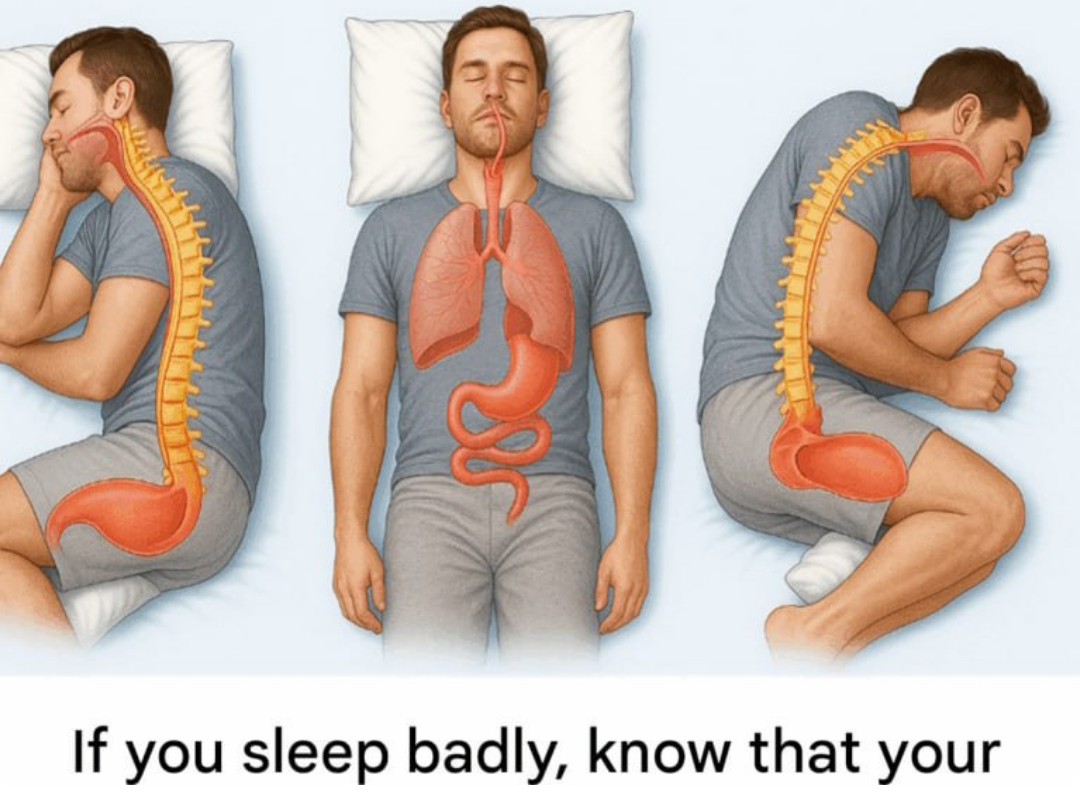
- Acid rising at 3 a.m.? → Stomach positioned above the esophagus (right-side or supine).
- Numb hands or stiff shoulders? → Nerve compression from fetal curl or stomach sleeping.
Ignoring these cues doesn’t just steal rest—it strains systems over time.
🌿 The Left-Side Advantage: More Than Folklore
Skeptical of the “left-side trend”? The evidence is compelling—and deeply physiological:
- Digestive Harmony: Gravity aids stomach-to-intestine flow, reducing reflux and bloating.
- Lymphatic Flow: The thoracic duct (your body’s main lymph drainage channel) runs left—enhancing toxin clearance.
- Pregnancy Support: Takes pressure off the inferior vena cava, improving blood return to the heart and oxygen to the baby.
- Brain Detox Boost: Research shows left-side sleeping optimizes the glymphatic system—your brain’s overnight cleanup crew—potentially lowering long-term risk for Alzheimer’s and Parkinson’s.
This isn’t woo-woo wellness. It’s biophysics—working with, not against, your anatomy.
⚖️ The Full Spectrum: Pros, Cons, and Who Should Avoid What
|
Position
|
Benefits
|
Risks
|
Best For
|
|---|---|---|---|
|
Left Side
|
↓ Reflux, ↑ lymph flow, brain detox, pregnancy-safe
|
May strain shoulder in very thin individuals
|
Most adults, pregnant women, reflux sufferers
|
|
Right Side
|
Gentle on heart (for some cardiac conditions)
|
↑ Acid reflux, potential liver compression
|
Rarely ideal—use only if medically advised
|
|
Back (Supine)
|
Spinal neutrality, ↓ facial wrinkles
|
↑ Snoring, sleep apnea risk, back pain in some
|
Infants (SIDS prevention), not for apnea sufferers
|
|
Stomach (Prone)
|
May reduce snoring temporarily
|
Neck torsion, spinal misalignment, organ compression
|
Avoid if possible—highest risk of morning stiffness
|
Note on Aging: After 50, sleep apnea risk rises sharply. Back sleeping—once neutral—becomes high-risk. Side-sleeping isn’t just preferable; it’s protective.
🌟 Real Stories, Real Shifts
- Sophie, 36: Postpartum reflux left her dreading bedtime. Medication dulled symptoms but didn’t resolve them. Switching to strict left-side sleeping (with a body pillow) brought relief in 3 nights—and full healing in 2 weeks.
- Marc, 59: Diagnosed with moderate sleep apnea, he resisted CPAP. A simple wedge pillow + left-side positioning reduced apnea events by 70% overnight—improving energy more than caffeine ever could.
🚫 Debunking 5 Persistent Myths
- “Back sleeping is universally best.”
→ False. Ideal for spinal alignment only if your airway stays open. For 20%+ of adults, it’s harmful. - “Stomach sleeping aids digestion.”
→ False. It compresses the abdomen, slowing motility and worsening reflux. - “Ergonomic pillows are marketing hype.”
→ False. A contoured pillow maintains cervical alignment—critical for nerve and blood flow. - “Snoring is just noisy, not dangerous.”
→ False. It’s often the sound of oxygen deprivation—linked to hypertension, stroke, and cognitive decline. - “I’ll catch up on sleep weekends.”
→ False. Sleep debt doesn’t compound like savings. Irregular patterns disrupt circadian rhythm, worsening fatigue long-term.
🛏️ 5 Gentle Adjustments for Deeper Rest
- Pillow Between Knees (side sleepers): Aligns hips, relieves lower back strain.
- Wedge Under Mattress (not just pillow): Elevates entire torso—prevents acid creep.
- Nasal Dilators or Tape: Opens airways before collapse occurs (try Breathe Right strips or 3M Micropore).
- Cervical Pillow: Supports neck curve—no “chin tuck” or “head drop.”
- Bedtime Anchor: Start every night on your left side—even if you shift later. Initial alignment sets the tone.
A Final Thought
Your sleep position is the silent architect of your vitality. It doesn’t demand a new mattress or a prescription. Just awareness. Just intention.
Because how you rest tonight doesn’t just shape tomorrow’s energy—it shapes your resilience, your clarity, your long-term health. And sometimes, the most powerful medicine isn’t taken.
It’s assumed—quietly, nightly, in the sacred space between waking and dreams.