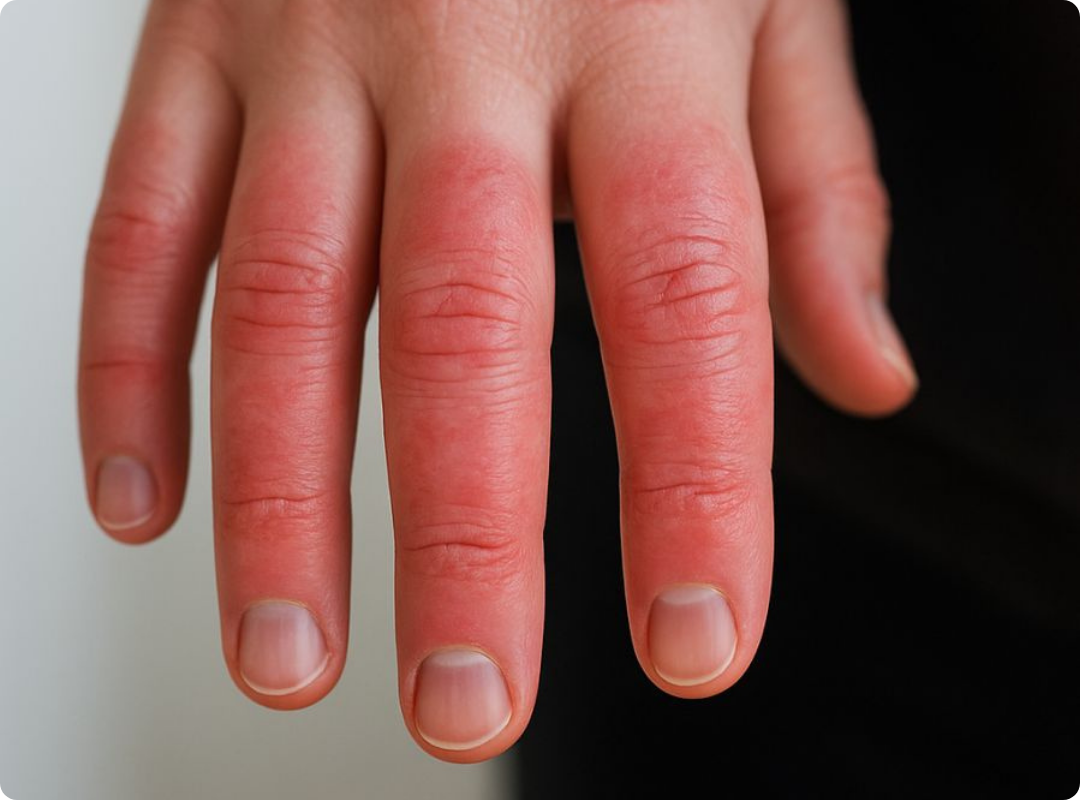
That sharp, stinging heat in your fingers as you step indoors from the winter air—the skin flushed crimson, throbbing, almost too alive—is more than discomfort. It’s your body sending a signal: “This isn’t just cold. Something’s shifting.”
You’re not imagining it. And you’re not alone. For many, this reaction—often chilblains (pernio)—is a seasonal visitor: tender, alarming, but rarely dangerous. Yet when a doctor’s visit feels impossibly distant, that burning sensation can tip into anxiety.
This guide is your calm, clear companion: no alarmism, no jargon—just science-backed, gentle steps to soothe, protect, and empower you right now, while honoring the wisdom of your own body.
🔥 What’s Likely Happening: Chilblains (Pernio)
When small blood vessels in your hands overreact to cold and dampness, they inflame instead of constricting smoothly. The result? Red, swollen, burning patches—often on fingers, but sometimes palms or knuckles.
Key traits:
- Appears 1–4 hours after cold exposure
- Itches, stings, or feels “hot” (even in cold air)
- May blister or peel in 1–2 weeks
- Usually resolves in 1–3 weeks with care
It’s not frostbite (no numbness, no white/waxy skin)—but it is your circulation asking for kindness.
🚨 When to Seek Help Now (Not Later)
While chilblains are typically self-limiting, these signs need prompt attention:
→ Skin turns blue, purple, or black (tissue oxygen loss)
→ Numbness or pins-and-needles that won’t fade
→ Open sores, pus, or spreading red streaks (infection)
→ Pain so severe it disrupts sleep
If any of these occur:
- Call a nurse advice line (many insurers offer 24/7 access)
- Visit an urgent care—don’t wait. Early care prevents scarring.
🌡️ Your Immediate Relief Protocol (Do This First)
Goal: Rewarm slowly, reduce inflammation, prevent damage.
- Move gently indoors—no rushing.
- Shake out hands for 30 seconds (stimulates circulation without strain).
- Soak in lukewarm water (98–100°F / 37°C)—not hot—for 10–15 min.
→ Why? Hot water shocks fragile vessels, worsening inflammation. - Pat dry—never rub—with a soft towel.
- Apply a soothing layer:
→ Aloe vera gel (anti-inflammatory)
→ 1% hydrocortisone cream (OTC, for 3 days max to reduce flare)
→ Lanolin ointment (locks in moisture, repairs barrier)
Avoid: Hair dryers, heating pads, or “warming” by a fire—direct heat = more damage.
🧤 Smart Hand Protection: Beyond Basic Gloves
Chilblains thrive in damp cold. Your defense? Layered, dry warmth:
|
Layer
|
Purpose
|
What to Use
|
|---|---|---|
|
Base
|
Wicks moisture away from skin
|
Silk or thin merino liner gloves
|
|
Mid
|
Traps heat
|
Wool or fleece gloves/mittens
|
|
Shell
|
Blocks wind, snow, rain
|
Waterproof outer mittens (e.g., ski gloves)
|
Pro tips:
→ Mittens > gloves—fingers share warmth; less heat loss.
→ Pre-warm mittens with a hand warmer (tucked in outer pocket—never against skin).
→ Dry gloves overnight—damp fabric is chilblain fuel.
🌿 Gentle At-Home Care That Actually Helps
- Moisturize 2x/day: Focus on lanolin (Lansinoh), ceramide creams (CeraVe), or urea-based ointments (Eucerin 10% Urea).
- Skip harsh soaps: Wash hands with lukewarm water + fragrance-free cleanser (Cetaphil).
- Night repair: Coat hands in thick ointment, wear cotton gloves to bed.
Skip viral “hacks” that backfire:
❌ Petroleum jelly on broken skin (traps bacteria)
❌ Vinegar soaks (disrupts pH, stings)
❌ Vigorous massage (irritates inflamed vessels)
🚫 Hidden Triggers You Might Overlook
- Caffeine & nicotine: Both constrict blood vessels—limit coffee/smokes in cold months.
- Tight jewelry: Rings restrict circulation—remove when outdoors.
- Damp sleeves: Water wicks up sleeves → cold wrists → hand vulnerability.
- Dehydration: Thicker blood = poorer micro-circulation. Sip warm herbal tea all day.
📝 Track Symptoms Like a Pro (Until You Can See a Doctor)
Grab your phone and:
- Snap a photo daily of affected areas (lighting/angle consistent).
- Note triggers: “Walked dog in 30°F rain—hands burned after 10 min.”
- Rate discomfort: 1–10 scale (helps your doctor gauge severity).
This isn’t hypochondria—it’s advocacy. You’re gathering data to make your eventual appointment productive.
💡 Bridge the Gap: Free/Low-Cost Support Now
- Telehealth: Many insurers cover $0 virtual visits for urgent concerns. Describe symptoms clearly: “burning red hands after cold exposure, no numbness, no open sores.”
- Pharmacist consult: Ask about OTC options (e.g., nifedipine cream off-label for chilblains—some compounding pharmacies make it).
- Nurse lines: Call your insurance’s 24/7 nurse line—they triage for free.
❄️ Prevent Next Winter’s Flare-Ups
- Start in fall: Use moisturizer before cold hits—build resilience.
- Circulation boosters: Daily brisk walks, yoga (especially wrist circles), or dry brushing.
- Nutrition: Vitamin C (citrus, bell peppers) strengthens capillaries; omega-3s (flax, walnuts) reduce inflammation.
“Chilblains aren’t a flaw in you—they’re a conversation between your body and the world. Listen gently. Respond wisely.”
You’ve got this. One gentle step at a time—your hands will find their calm again.