If you’ve ever hunched over a sewing project, squinting at a needle’s tiny eye while your thread frays into a fuzzy mess, you’re not alone. Even seasoned stitchers hit this universal wall: threading a needle can feel like threading a hair through a keyhole—especially in poor light, with slippery thread, or when your fingers just won’t cooperate.
But here’s the good news: you don’t need special tools or perfect eyesight. With a few household items and smart techniques, you can turn this frustrating chore into a seamless step—every single time.
Why Is Threading So Hard?
It’s not you—it’s physics. Several factors make threading tricky:
- Poor lighting: The needle’s eye is minuscule; without bright, direct light, it’s nearly invisible.
- Fray-prone threads: Silk, polyester, and other fine fibers split easily, creating fuzzy ends that won’t pass through.
- Ultra-fine needles: Sharps and embroidery needles have eyes so small they demand surgical precision.
The solution? Work with these challenges—not against them.
4 Genius Household Hacks to Thread Any Needle
1. The Toothbrush Trick
Yes—your toothbrush isn’t just for teeth. Use a clean, new toothbrush with soft bristles as a threading guide.
How it works:
- Lay the thread across the bristles.
- Hold the needle vertically, eye down, and gently press it into the bristles.
- The stiff yet flexible bristles will funnel the thread straight through the eye—no aiming required.
Why it’s brilliant: It turns chaos into order. Frayed ends align naturally, and your hands stay steady.
2. The Blister Pack Helper
That empty medicine blister pack? Don’t toss it. Its rigid plastic pockets are perfect for taming thread.
How it works:
- Slide the thread end into an empty cavity.
- Position the needle eye at the opening and press gently.
- The plastic holds the thread straight and firm, preventing unraveling.
Why it’s brilliant: It’s precise, reusable, and keeps synthetic threads from splitting.
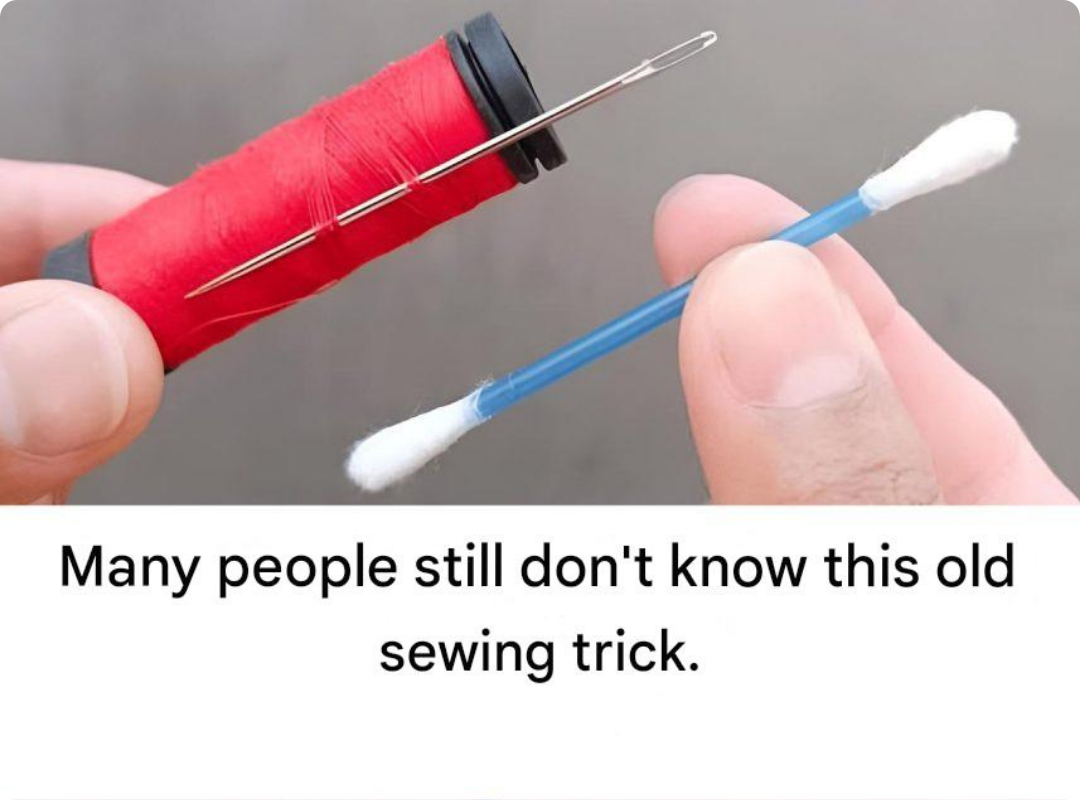
3. The Cotton Swab Stabilizer
A pinch of cotton from a swab acts as a soft “needle threader” you already own.
How it works:
- Wrap a small tuft of cotton around the last ½ inch of thread.
- Use this padded tip to guide the thread through the eye.
- Once through, simply pull the cotton off.
Why it’s brilliant: The cotton adds bulk and control without damaging delicate fibers.
4. The Paper Fold Method
Got a receipt, ticket stub, or scrap of stiff paper? Fold it into a threading tool.
How it works:
- Fold the paper in half.
- Slip the thread into the crease.
- Insert the folded edge through the needle eye, then pull the paper out, leaving the thread behind.
Why it’s brilliant: The paper acts like a built-in stiffener—ideal for limp or curly threads.
Bonus: Good Habits for Easier Threading
- Cut thread at a sharp angle – A clean, diagonal cut creates a smoother point.
- Use a needle threader – If you have one, it’s worth keeping in your kit.
- Work near a bright lamp – Natural or LED light makes the eye far easier to see.
- Moisten the thread tip slightly – Just a lick (or damp cloth) can help fibers bind temporarily.
- Store needles upright – In a pincushion or magnetic holder, so you always know which end is which.
Looking for more useful insights? You may also enjoy these related reads:
- 6 Hidden Functions on Your Phone You Didn’t Know Existed
- The Hidden Purpose Behind the Lines on Your Bath Towels
- What’s the Purpose of That Tiny Hole in a Safety Pin?
Threading a needle shouldn’t be the hardest part of your sewing project. With these simple, no-cost tricks—using items you already have—you’ll spend less time fighting thread and more time creating.
So next time you reach for that needle, remember: the secret isn’t better eyesight. It’s smarter technique. And now, you’ve got four of them in your back pocket.