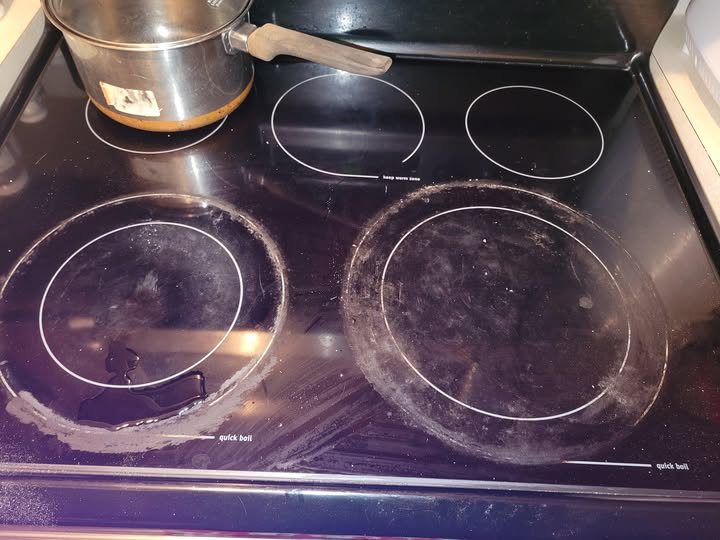
Glass-top electric stoves offer sleek design, precise temperature control, and affordability—which explains their enduring popularity. But let’s be honest: their glossy surface is a magnet for spills, splatters, and stubborn burnt-on residue. A single boil-over can harden into a caramelized stain that clings like it’s part of the glass itself. Over time, even diligent wiping leaves behind a dull film or ghostly streaks—until your cooktop no longer looks clean, just cleaned.
The good news? You don’t need abrasive scrubbers, expensive specialty cleaners, or hours of scraping. There’s a gentle yet remarkably effective method—backed by trusted home experts like Jillee from One Good Thing by Jillee—that uses just four pantry staples to revive even the most neglected surface.
The Science-Backed, Streak-Free Reset
What You’ll Need:
- Distilled white vinegar
- Liquid dish soap (a degreasing kind works best)
- Baking soda
- A clean, lint-free cotton towel
- A soft-bristled brush (like a nylon dish brush or old toothbrush)
- A microfiber cloth
Step-by-Step:
- Loosen & Lift: Generously spray distilled vinegar across the entire cool stovetop—let it pool slightly over tough spots. The acidity helps break down mineral deposits and grease.
- Steam & Soak: Lightly dampen a cotton towel with warm water, wring it almost dry (it should be moist, not dripping), and lay it smoothly over the vinegar-coated surface. Let it sit for 15–20 minutes. This creates a gentle steam effect that softens baked-on grime without scratching.
- Scrub Gently: Remove the towel and use your soft brush to lightly agitate stubborn spots. For particularly tenacious residue, sprinkle a pinch of baking soda on the area first—it adds mild abrasion without scratching.
- Rinse & Shine: Give the surface one final light mist of vinegar, then buff dry with a clean microfiber cloth using circular motions. The result? A streak-free, reflective finish—no haze, no streaks, just clarity.
💡 Pro Tip: If your stovetop has deep-set stains or sugary burns (like from caramel or syrup), repeat the towel-soak step once more—it’s worth the extra 20 minutes.
Prevention Is Easier Than Cure
While this deep-clean method works wonders, maintenance is simpler:
- Wipe spills as soon as the surface is cool but still warm (never while hot—thermal shock risks cracking).
- Use a dedicated stovetop scraper (plastic or silicone-edged) for dried bits—never metal.
- Store your microfiber cloth and vinegar spray under the sink for weekly touch-ups.
A gleaming cooktop isn’t just about aesthetics—it reflects care, invites cooking joy, and makes your entire kitchen feel more intentional. And the best part? This method is safe, non-toxic, and costs pennies. Your glass stovetop isn’t destined to look tired. With a little patience and the right approach, it can shine—truly shine—again.