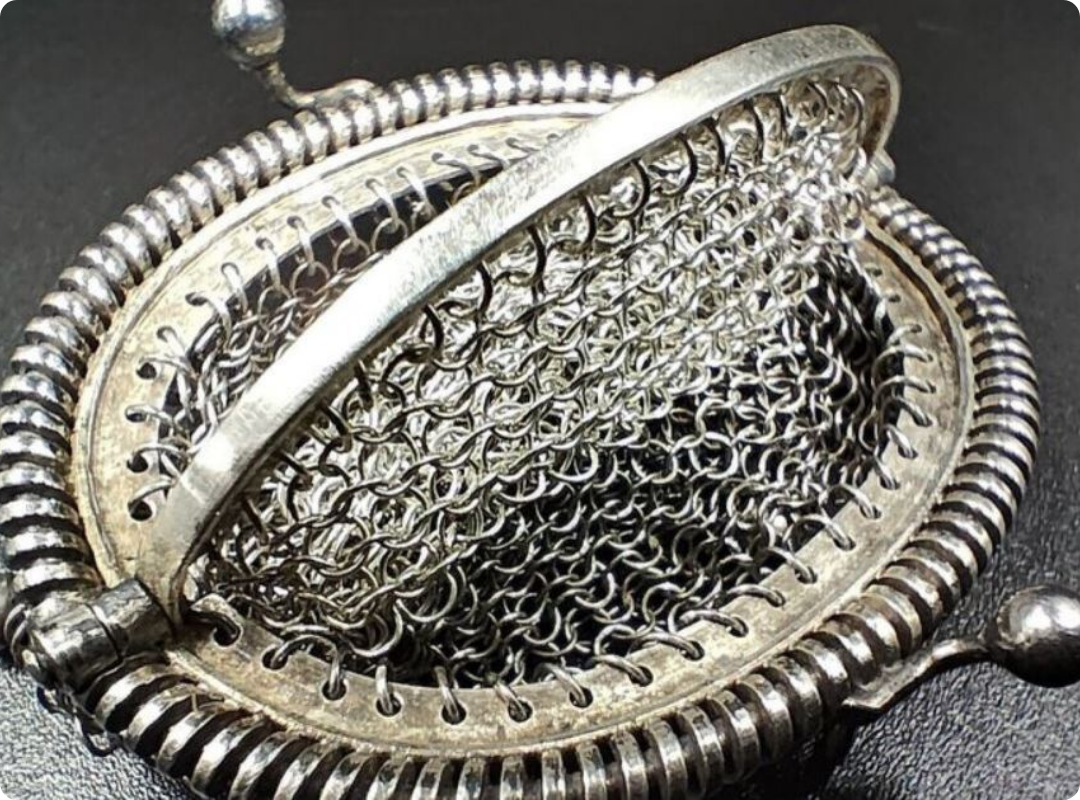
In the refined world of the late 19th century, even the smallest personal item could speak volumes. Among the most telling of these was the antique Victorian silver purse—a masterpiece of craftsmanship that transcended mere utility to become a potent symbol of social standing, taste, and affluence.
Far more than a container for coins or calling cards, this exquisite accessory was a carefully curated statement. Crafted from sterling silver and adorned with intricate engravings, delicate filigree, or raised embossing, each purse reflected the owner’s discernment and position in society. Designs often drew inspiration from nature—featuring blossoms, birds, and vines—or echoed the ornate drama of Gothic revival and Rococo motifs, rendered with astonishing precision.
These purses came in a range of forms: some were petite and dainty, designed to dangle gracefully from a chatelaine (a decorative belt hook worn at the waist), while others took the shape of structured clutches, secured with ornamental clasps often set with semi-precious stones like garnet or turquoise. Despite their opulent exteriors, they were remarkably practical. Interiors were typically lined with silk or velvet to cushion their contents, and thoughtfully divided into compartments for coins, folded notes, and the all-important visiting cards that governed Victorian social etiquette.
Carried during formal calls, afternoon teas, or evening engagements, the silver purse was never just an accessory—it was a silent ambassador of status. In an era when appearance dictated perception, displaying such a refined object signaled not only wealth but cultural sophistication.
These purses were frequently bestowed as heirloom gifts—presented at weddings, anniversaries, or coming-of-age celebrations—and cherished across generations. Their enduring value lay not only in their precious metal but in the artistry and social history they embodied.
Today, an antique Victorian silver purse remains far more than a relic. It is a tangible echo of a bygone age—a testament to a time when beauty and function intertwined, and even the smallest object could carry the weight of legacy, elegance, and identity. For collectors and historians alike, it continues to captivate—not just as a collectible, but as a window into the soul of the Victorian era.