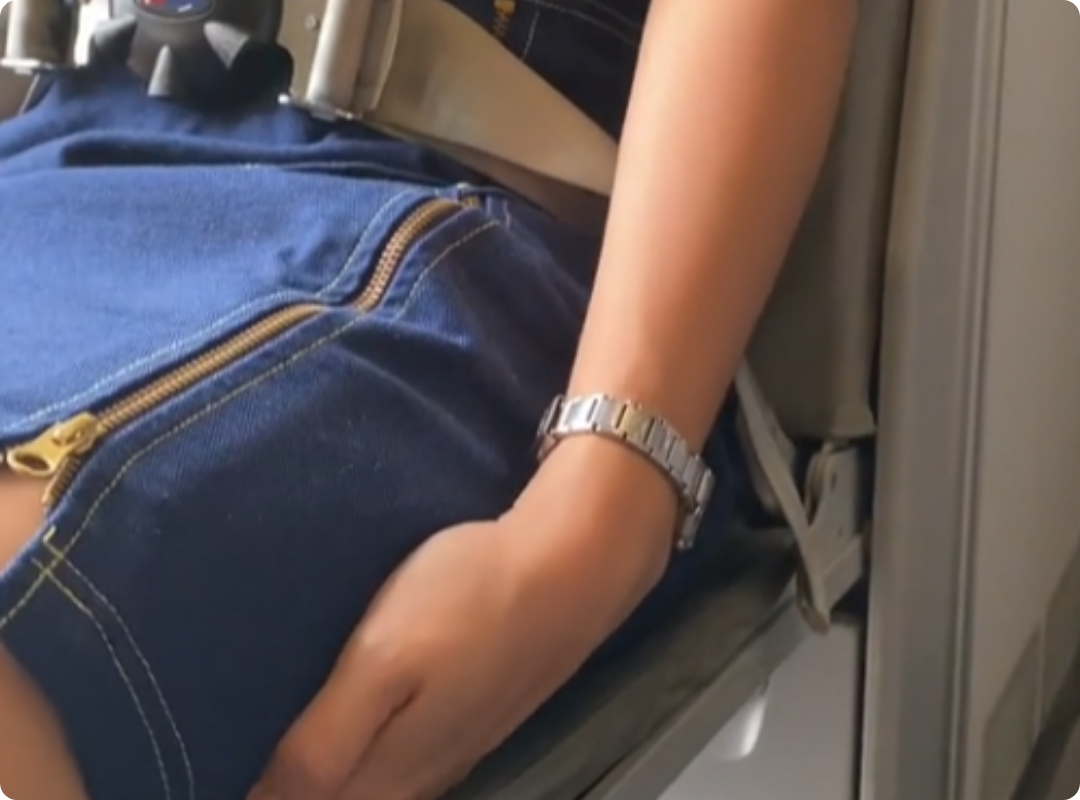
If you’ve ever watched the cabin crew during takeoff or landing, you may have noticed something curious: flight attendants often sit with their hands tucked neatly under their thighs. It’s a subtle but consistent posture—one that seems oddly formal for such a routine part of the flight.
So why do they do it?
According to veteran flight attendants, this isn’t about comfort, etiquette, or even staying out of the way. It’s a critical safety technique—one that most passengers never notice, but that plays a vital role in emergency preparedness.
The Real Reason: Bracing for Impact
During takeoff and landing—the two most critical phases of any flight—the cabin crew must be ready to respond instantly in the unlikely event of an emergency. To ensure they can do so effectively, they adopt a standardized brace position while seated in their jump seats.
Placing their hands under their thighs serves two key purposes:
- Prevents Flailing Arms: In the event of sudden turbulence or a hard landing, loose arms can flail uncontrollably, risking injury to the crew member or nearby passengers. Tucking the hands keeps them secure and out of harm’s way.
- Keeps Hands Ready and Uninjured: By keeping their hands protected beneath their legs, flight attendants ensure their hands remain unharmed and fully functional. In an emergency evacuation, they need to operate doors, deploy slides, and assist passengers—all of which require dexterity and strength. A hand injured by slamming into a seatback or bulkhead could compromise their ability to help others.
It’s Part of Rigorous Safety Training
This posture isn’t arbitrary—it’s drilled into every flight attendant during training. Airlines follow strict protocols based on aviation safety guidelines from organizations like the FAA and ICAO. The brace position is designed to minimize injury while maximizing readiness.
As one senior flight attendant explains:
“We’re not just sitting there—we’re in a state of active readiness. Our hands under our thighs means we’re protected, stable, and seconds away from action if needed. It’s one small detail that supports a much bigger safety system.”
Why Passengers Don’t Do This (But Should Stay Seated!)
While passengers aren’t trained to assume this specific brace position, they’re still urged to remain seated with seatbelts fastened during takeoff and landing. The crew’s role is to manage emergencies; the passenger’s role is to stay safe and follow instructions—which includes staying put until the seatbelt sign turns off.
A Small Gesture with Big Implications
Next time you see a flight attendant sitting with hands tucked under their thighs, you’ll know it’s not a quirk—it’s a quiet act of professionalism and preparedness. In an industry where safety is paramount, even the smallest details are intentional.
That unassuming posture? It’s a silent promise: We’re ready, so you don’t have to worry.