We live in a world of constant motion—juggling careers, families, obligations—often treating our bodies like reliable machines that will keep running if we just push through fatigue. But the truth is, our bodies don’t fail without warning. They signal. They whisper. Sometimes, they shout.
I learned this the hard way.
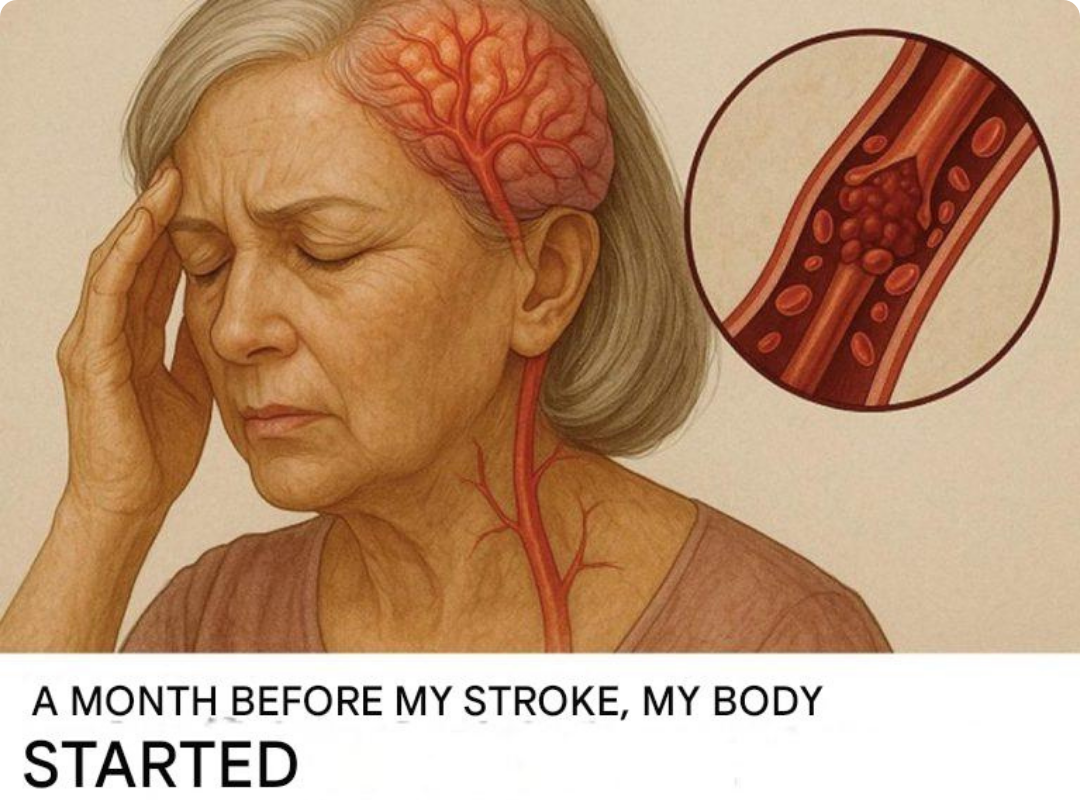
A month before I suffered a mild stroke—a transient ischemic attack, or TIA, often called a “mini-stroke”—my body sent unmistakable signs. I dismissed them as stress, aging, or overwork. Not because I didn’t care—but because I didn’t recognize the language.
I’m sharing this not to frighten, but to empower. Because strokes are time-sensitive emergencies—and early intervention can mean the difference between recovery and lasting disability.
What Is a Stroke, Really?
A stroke happens when blood flow to part of the brain is interrupted—either by a clot (ischemic, 87% of cases) or a bleed (hemorrhagic). Without oxygen, brain cells begin dying within minutes. Outcomes vary: slurred speech, facial drooping, limb weakness, memory lapses, or vision changes. Risk factors include high blood pressure, smoking, sedentary lifestyle, diabetes, atrial fibrillation, and age—but strokes can and do happen to younger, seemingly healthy people.
A TIA is a warning stroke: symptoms mimic a full stroke but resolve within minutes to hours as blood flow temporarily restores. It’s not “just a scare.” It’s a red-alert alarm—40% of TIA patients have a full stroke within days if untreated.
The Four Signals I Ignored
1. Sudden Peripheral Vision Shift
One morning, while driving, I noticed my side view felt “narrowed”—like looking through a tunnel. Central vision was sharp, but the edges were hazy and indistinct. I chalked it up to screen fatigue and dry eyes.
✅ What it was: Amaurosis fugax—temporary vision loss from reduced blood flow to the optic nerve. A classic TIA symptom.
2. Unilateral Arm Weakness
During a routine weights session, my right arm wouldn’t lift. Not sore—unresponsive. I’d grip the dumbbell, and it would just… drop. It happened off-and-on for three days. I told myself I’d “overdone it.”
✅ What it was: Motor weakness on one side—a hallmark sign of neurological disruption. Often subtle at first.
3. Focal Memory Lapses
In a team meeting, I repeated the same point twice—word for word—unaware. Later, at the grocery store, I asked the clerk for an item I’d just been handed. It wasn’t forgetfulness. It was like a 10-second system reset.
✅ What it was: Transient global amnesia—a brief, reversible shutdown in memory circuits, often vascular in origin.
4. Wild Blood Pressure Swings
My BP had always been textbook (120/80). Suddenly, it swung from 92/60 to 178/102 in 48 hours—no explanation. I monitored it, but didn’t seek help.
✅ What it was: Autonomic dysregulation—a sign the brainstem (which controls BP) was under stress.
The Turning Point
When the arm weakness returned—this time with a slight facial tingle—I called my doctor immediately. Within hours, I was in the ER. Tests confirmed it: a small clot had briefly blocked a branch of my middle cerebral artery. A TIA. My brain had sounded the alarm—and this time, I listened.
Treatment began the same day: blood thinners, statins, and aggressive risk-factor management. I overhauled my diet, started daily walking, prioritized sleep, and monitor my BP at home. Today, I’m fully recovered—but deeply aware: my second chance came from heeding the first warning.
A Final Plea
If you or someone you love experiences any sudden, unexplained:
🔹 Vision changes
🔹 Weakness or numbness (especially one-sided)
🔹 Speech difficulty
🔹 Confusion or memory gaps
🔹 Severe headache or dizziness
—Call emergency services immediately.
“Wait and see” is not a strategy with stroke.
Time lost is brain lost.
But time saved?
That’s a life reclaimed.
Don’t wait for the crisis. Listen to the whispers.